Cosmetics OEM vs ODM vs OBM: Choosing by What You'll Own
OEM means the brand leads concept and formula while the factory manufactures; ODM means the manufacturer proposes the formula and development; OBM means the brand owns the product, trademark, IP, and distribution. Indie K-beauty brands typically validate with ODM, then move formula IP and exclusivity to the brand as they scale.
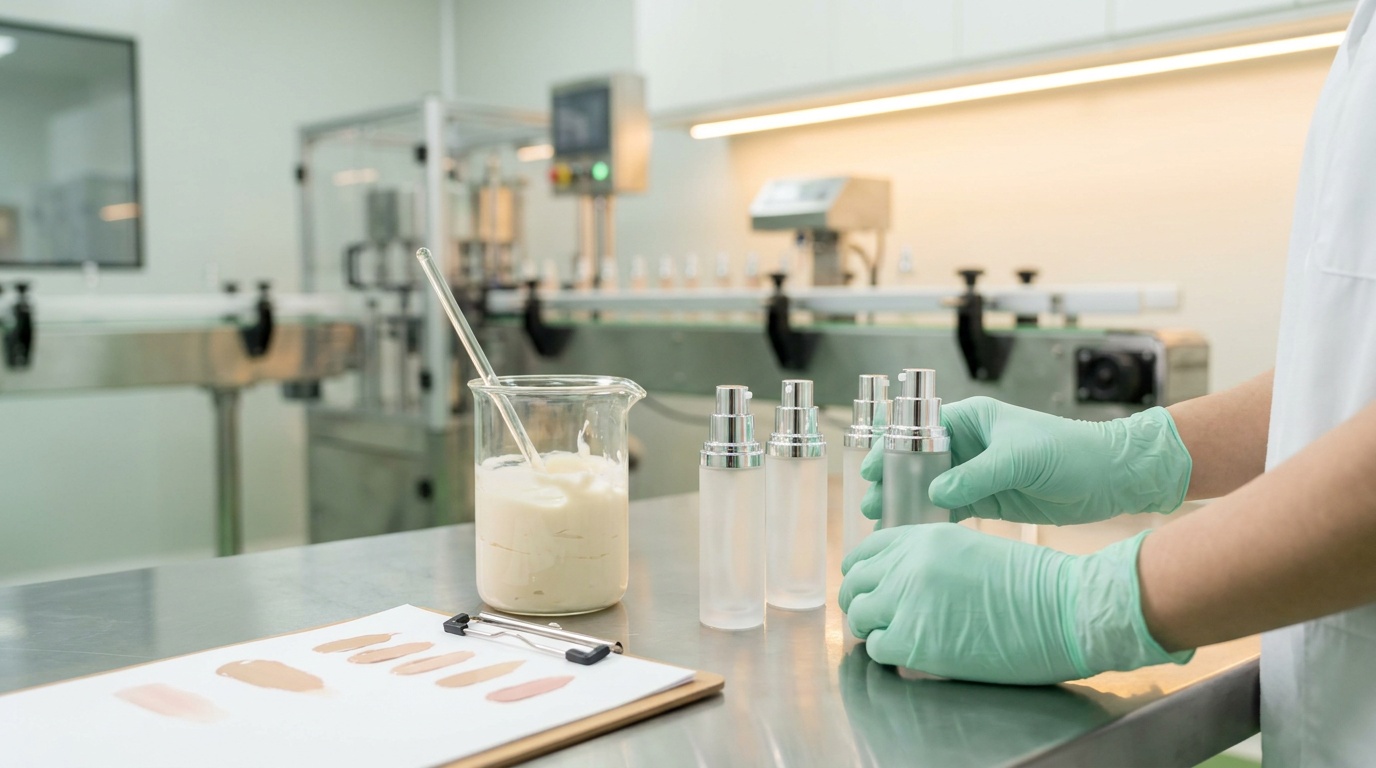
When choosing a manufacturing model, the real question is not unit price but ‘what is left with the brand once this deal ends.’ OEM, ODM, and OBM are, before they are production methods, the line that decides who holds the formula IP, the trademark, and exclusivity. Here is what each model means, and how an indie K-beauty brand should switch between them — moving assets toward the brand as it grows.
The core difference between OEM, ODM, and OBM
When picking a manufacturing model, the most important question is ‘who owns what.’ Before unit price, check formula IP, trademark rights, clinical/regulatory dossiers, and the scope of exclusivity.
| Model | What the brand mainly owns | Upside | Risk |
|---|---|---|---|
| OEM | Trademark, concept, sometimes formula IP | Strong for differentiation & export | Upfront R&D, MOQ, planning burden |
| ODM | Trademark, packaging, marketing assets | Fast launch, low entry barrier | Similar formulas spread; vague exclusivity |
| OBM | Trademark, product strategy, IP, distribution | Builds margin & brand equity | Highest inventory, marketing, regulatory load |
Common traps in formula IP and exclusivity contracts
In ODM, the phrase ‘a formula exclusive to your brand’ may not mean legal ownership. The contract should spell out formula ownership, usage rights, who owns improved formulas, and the scope of any ban on selling identical or similar formulas.
Exclusivity in particular should be written by period, country, channel, ingredient combination, formulation, texture, and efficacy claim. ‘Two-year exclusivity for Korean online channels’ and ‘worldwide all-channel exclusivity’ mean completely different costs and rights. Export buyers are sensitive to whether the same manufacturer could supply a similar formulation to a competitor.
Margin and risk move in opposite directions
ODM is fast and cheap to start, but weak differentiation invites price competition. OEM carries more formula, testing, and packaging development, so the entry barrier is higher — but it is more likely to build repeat-purchase products and hero SKUs over time. Running OBM-style can create the most brand equity, but you manage inventory turns, claims, per-country regulation, and distribution margin directly.
How an indie K-beauty brand switches by growth stage
Stage 1: Validate the market quickly with ODM
Early brands realistically confirm customer response with 1–3 SKUs. Here, weigh MOQ, lead time, stability data, and existing sales references first. But file trademarks — including in your key export countries — before launch.
Stage 2: Move winning SKUs to custom ODM or OEM
For products that have accumulated reviews, repeat purchases, and buyer inquiries, adjust fragrance, texture, key-ingredient levels, and packaging structure to create distance from look-alikes. From this point, negotiate formula-transfer potential, the right to approve ingredient changes, and the right to use test data.
Stage 3: Accumulate OBM assets as exports scale
Overseas buyers look beyond ‘a good product’ to stable supply, exclusivity, certification/document readiness, and a consistent brand story. So manage formula IP, clinical data, product names and trademarks, and per-country labeling data as internal assets.
Choose by ‘assets to own,’ not ‘fastest launch’
ODM can be reasonable early on, but relying on ODM forever may leave the brand owning only a trademark and content. Choose OEM too early and development and inventory burdens rise. The best choice changes by stage; the key is to move IP and exclusivity toward the brand, starting with the products that sell.
Sources
FAQ
What is the biggest difference between cosmetic OEM and ODM?
OEM has the brand lead more of the product planning and formula direction while the factory manufactures. ODM has the manufacturer propose products from its own formulas and development capacity, which the brand selects and modifies to launch.
Does the brand own the formula IP of an ODM product?
Not automatically. In most cases the manufacturer holds the formula and the brand gets the right to sell that product. Ownership transfer or exclusive-use rights must be stated separately in the contract.
Should an indie K-beauty brand choose OEM from the start?
Not necessarily. It is realistic to validate market response quickly with ODM first, then move proven SKUs to custom ODM or OEM.
What must I check in a cosmetics exclusivity contract?
Check the exclusivity period, countries, sales channels, the definition of identical/similar formulas, rights to improved formulas, and whether you can keep using the formula after termination. The word ‘exclusive’ alone does not protect the scope of rights.
Why do export buyers care about OEM vs ODM?
Buyers check differentiation, stable supply, whether the same formula could reach a competitor, and dossier readiness. Unclear formula/data rights can be a burden for long-term distribution deals.
Does OBM mean a manufacturer's brand, or a brand operating model?
OBM generally means owning your own brand and integrating product planning, IP, trademark, and distribution strategy. From an indie view, if the brand owns the core assets even while outsourcing manufacturing, that is close to OBM-style operation.
Want to manufacture this trend?
Verified Korean factory matching, sampling and production — get an instant quote.
Get a free quote on WishLabRelated insights
Cosmetics Export Compliance: MoCRA, CPNP & ANVISA in Practice
Treating K-beauty export as 'build first, register later' is risky. The US runs on MoCRA facility and product listing, the EU on CPNP notification with a Responsible Person, and Brazil on ANVISA notification or registration — so ingredients, labeling, and safety data must be aligned from the product-planning stage.
Read more →A Starter Guide to Korean OEM/ODM for Overseas Brands
The five things every overseas brand hits first when manufacturing in Korea — factory contact, MOQ, sample lead time, regulation and IP — explained step by step, from OEM vs ODM to getting a quote.
Read more →